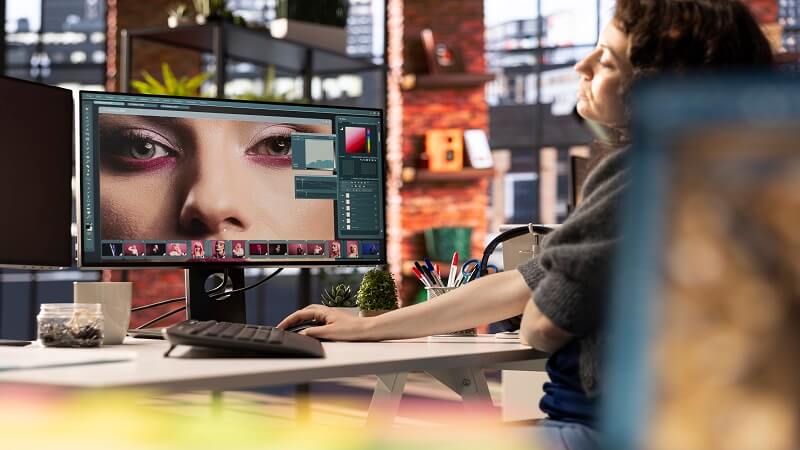
These five tools can always be relied upon to provide the best outcomes to the creators, marketers, and startup teams, especially when you need to edit images with AI, create refined images, and ship content faster.
By the year 2026, the AI face swap has advanced well past the background removal feature. They are able to substitute objects today, enhance photos, swap faces, create new elements and even transform still images into a video resource. Two weeks of testing these platforms on actual tasks: social ads, thumbnails, ecommerce pictures and landing page images have helped me reduce the list to the tools that actually save time and enhance quality.
This manual is addressed to real-life decision-makers. No hype. Just what works.
I am sure that at least one of these tools will be compatible with your workflow.
Best AI Image Editors at a Glance
| Tool | Best For | Modalities | Platform | Free Plan | Starting Price |
| Magic Hour | All-in-one editing + video crossover | Image + video + effects | Web | Yes | Freemium |
| Photoshop AI | Pro design control | Image | Desktop/Web | Trial | $20/mo |
| Canva AI | Fast marketing graphics | Image | Web/Mobile | Yes | $15/mo |
| Runway | Creative and experimental visuals | Image + video | Web | Limited | $15/mo |
| Fotor | Quick lightweight edits | Image | Web | Yes | $8/mo |
Magic Hour
The only platform that I tried that did not feel like another editor but rather a full-fledged creative tool is Magic Hour.
Within a single dashboard, you have the ability to improve photos, delete objects, re-style scenes and create new images. Next you may proceed to motion content without tools. In the test, I applied their image editor which is an AI.
to process images into short videos with their image to video AI and in the process clean the product photos.
workflow. The mere fact of handoff was time-saving.
Background removal was also sharper and the object replacement looked more natural than most of the prompt-based editors quality-wise.
Pros
- Fast browser-based workflow
- Clean object removal and retouching
- Works across images and video
- Generative edits and style changes
- Beginner friendly yet powerful
Cons
- Some advanced features require paid credits
- Batch tools still expanding
My take: If you modify photographs with AI weekly or everyday, this can replace three or four other tools. Personally, I would pick it for a content team.
Pricing: There is a free tier, and expensive plans increase with usage.
Adobe Photoshop (Firefly AI)
For designers looking for whole control, Photoshop endures to be the greatest option.
Generative Fill is excellent for extending backgrounds and reducing distractions. When you want pixel-perfect results, layer-based editing still outperforms all browser tools.
Pros
- Deep control and layering
- Strong generative fill
- Industry standard
Cons
- Steeper learning curve
- Slower for quick marketing tasks
- Requires installation
My take: Best for skilled designers and agencies. Overkill for quick social media posts.
Pricing: From $20/month
Canva AI
Canva prioritises simplicity and speed.
It’s great if you need to make social graphics quickly. Background removal, magic eraser, and templates enable you to move rapidly without design abilities.
Pros
- Extremely easy to use
- Huge template library
- Great for social posts and ads
Cons
- Limited fine control
- Outputs can feel template-based
My take: Perfect for founders and marketers who need results in a matter of minutes.
Pricing: Free + Pro plan
Runway
Runway combines AI editing with artistic creativity.
It works well with video projects and is powerful for stylised or cinematic imagery.
Pros
- Powerful generative tools
- Image and video features combined
- Good for creative concepts
Cons
- Results sometimes inconsistent
- Credit-based pricing can add up
My take: Excellent for artists promoting experimental or artistic styles.
Pricing: Limited free tier
Fotor
Fotor is easy to use and lightweight.
Although it can’t fully replace a creative suite, it does a good job at handling fast fixes.
Pros
- Fast edits
- Affordable
- Easy for beginners
Cons
- Fewer advanced AI tools
- Not ideal for teams
My take: Excellent for short touch-ups or informal use.
Pricing: From $8/month
How I Chose These Tools
I used actual production tasks to test each platform:
- Cleaning ecommerce product photos
- Removing backgrounds
- Object replacement
- Thumbnail creation
- Bulk exports
- Speed tests
I prioritised tools that saved time and required less manual adjustment. An editor didn’t make the list if it looked good but slowed me down.
Market Trends in AI Image Editing
In 2026, a few tendencies are evident:
- First, there is a convergence of picture and video tools. Short videos or advertisements are frequently created from static photos.
- Second, complex workflows are being replaced by prompt-free editing. Drag, click, and you’re done.
- Third, teams desire zero installations and collaboration, which is why browser-first tools are so popular.
- Platforms that combine editing, generation, and motion features in one place are winning.
Final Takeaway
Magic Hour is the greatest option overall for the majority of creators and marketers after testing each creation since it assimilates quality, speed, and all-in-one features into a single browser-based platform. Without needing you to switch tools, it manages routine changes, reproductive alterations, and even motion workflows.
Photoshop is still the finest for intricate, precise design work, Runway is great for creative experiments, and Canva is the wildest for quick social graphics. But if you’re searching for a dependable method of effectively editing images with AI, Magic Hour is the greatest place to start.
FAQs
Which free program is the top for using AI to modify images?
Both Magic Hour and Canva have robust free plans for regular editing.
Can AI replace Photoshop?
Yes, for the majority of social media and marketing content. Photoshop continues to be the best for intricate design work.
Can teams use browser editors quickly enough?
Yes. Modern cloud tools are fast and easier for cooperation.
Do these tools support video too?
Some do. Magic Hour and Runway both support image-to-video workflows, which is increasingly useful for ads and short-form content.